Who By Bible?
Reading The Invention of the Jewish People by Shlomo Sand, 1 of 4
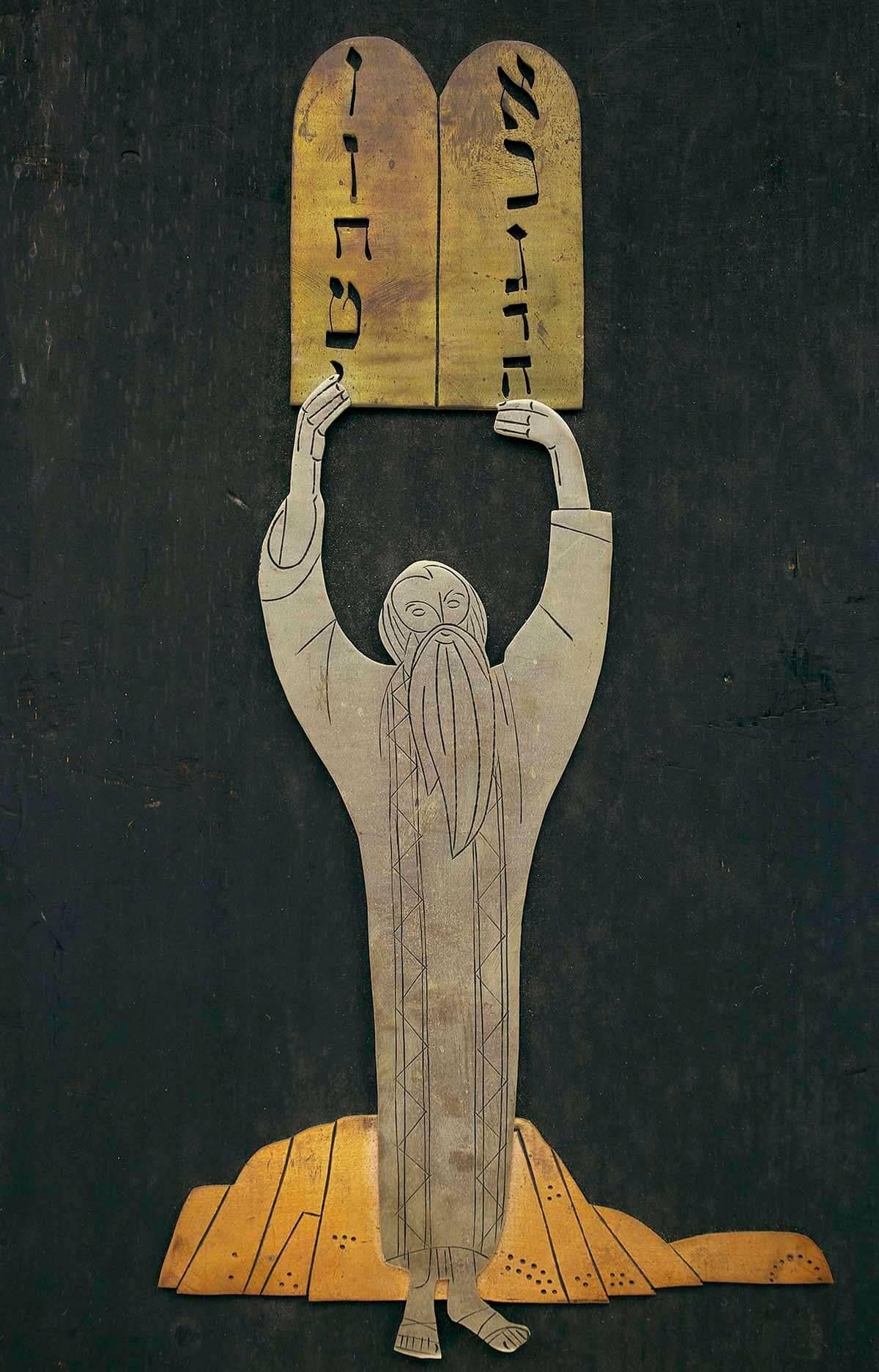
Part One: A Special People Above All People
The book was a difficult read. The preface (both editions), however, is superbly succinct, and you can hear it here (unfortunately the audio book is read by a very crass-sounding American ).
What follows is not a review or commentary, but a comprehensive summation, combined with a collection of large quotes. It’s intended for interested readers who either don’t intend to read the book, or would like to but may never get to it, to provide the gist of its arguments and help them develop a more informed and nuanced approach to the “JQ.”
The book is headlined on the cover as the “international bestseller,” which the New York Times calls “Extravagantly denounced and praised.” It was published in Hebrew in 2008 and in English in 2009 by Verso (this is a 2020 edition, also from Verso).
The thesis is in the title.
Simply put, the book explores the idea of a Jewish race that goes back to Abraham, Isaac and Jacob, and concludes that it has no basis in history. It argues that the attempt to turn the Old Testament into a record of an ethnic and racial history is spurious, even dishonest, all the more explicitly (and catastrophically) since the foundation of Israel.
This was when the idea of a Jewish race chosen by God, paradoxically and absurdly, became secular. The Israel nation—like the Zionist movement—do not depend (explicitly) upon the idea of the Bible as “the Word of God,” or on self-identifying Jews practicing Judaism or obeying the commandments, or even whether they’re religious or not (this is a larger subject the book doesn’t get into).
Jewish identity and Israel, in short, no longer relate to Yahweh or to the Divine, but only to cultural and geopolitical ideas. The Bible is useful and relevant not a theology or moral code, but as a “history” of a “people.”
Yet historically, scientifically, archaeologically, Sand is arguing, very little evidence has been found to support the main biblical narratives. Specifically, he cites the alleged kingdoms of Solomon and David, and then the supposed Jewish “exile” in 70 CE, that he says was laid over, and used to replace or update, the idea of a Jewish exile to Babylonia, around 600 BC.
Sand sees the history as not a history but a mythology, with elements of historical characters mixed in. There’s simply no way, he claims, to trace a Jewish genealogy back from contemporary, self-identifying Jews and Israelis to any kind of people, per se, much less to Abraham and the original Hebrews.
Unbridled Ethnocracy
This is from the introduction:
For Israelis, specifically those of Jewish origin, such mythologies [those of other cultures] are far-fetched, whereas their own history rests on firm and precise truths. They know for a certainty that a Jewish nation has been in existence since Moses received the tablets of the law on Mount Sinai, and that they are its direct and exclusive descendants (except for the ten tribes who are yet to be located). They are convinced that this nation “came out” of Egypt; conquered and settled “the land of Israel,” which had been famously promised it by the deity; created the magnificent kingdom of David and Solomon, which then splits into the kingdoms of Judah and Israel. They are also convinced that this nation was exiled, not once but twice, after its periods of glory—after the fall of the First Temple in the sixth century BCE, and again after the fall of the Second Temple, in 70 CE. Yet even before that second exile, this unique nation had created the Hebrew Hasmonean kingdom, which revolted against the wicked influence of Hellenization.
They believe that these people—their nation, which must be the most ancient—wandered in exile for nearly two thousand years, and yet, despite this prolonged stay among the Gentiles, managed to avoid integration with, or assimilation into, them. The nation scattered wildly, its bitter wanderings taking it to Yemen, Morocco, Spain, Germany, Poland, and distant Russia, but it has always managed to maintain close blood relations among the far-flung communities and to preserve its distinctiveness (p. 16-17).
He cites a “historical irony” that is illustrative of the shifting sands of Jewish identification and self-mythologizing:
there were times in Europe when anyone who argued that all Jews belong to a nation of alien origin would have been classified at once as an anti-Semite. Nowadays, anyone who dares to suggest that the people known in the world as Jews (as distinct from today’s Jewish Israelis) have never been and are still not a people or a nation, is immediately denounced as a Jew-hater.
In a footnote, Sand quotes Deuteronomy 7.6: “For thou art an holy people unto the Lord thy God: the Lord thy God hath chosen thee to be a special people unto himself, above all people that are upon the face of the earth.”