Victory of Thought Over the Natural
The Judaic Strand from Homo Serpiens, Revised & Redacted, Part 2
(Art by Michelle Horsley)
Old Homo Serpiens text in bold.
Slave State
If the sect of the Jews was a “slave race” to the Egyptians (an idea Ellis pretty much demolishes), it would have implied that the Egyptians viewed them as of lesser spiritual evolution, as inferior stock. Moses’ insistence that they were the chosen people would have acted as a balm to the battered egos of his potential task force, galvanizing them to follow him to Hell itself, if need be (or to spend forty years wandering in the desert). They were chosen because Moses chose them, and he chose them because they were his people.
Since Moses, the former slave-child, had, whether by chance or divine providence, become a prince and an initiate, it was predestined that the enslaved people be liberated, and only natural that they aspire, in their turn, to become royalty. Such aspirations required not merely that they be given their own land but their own personal God.
Something similar can be observed in the cases of abused children who rebel against their abusive parents. Although they attain a degree of individual freedom and autonomy through rebellion, more often than not they carry with them a “seed” of parental oppression—a generational wound—that leads to them becoming abusive parents themselves. In such a metaphor, Moses would have been the good father who took the abused children (the enslaved Jews) away from an oppressive home environment into a new one, a “promised land.” But, as is so often the case (and since Moses belonged to the exact same paradigm that had enslaved the Jews), this proved to be a somewhat less than perfect solution. The good father had issues of his own.
[…. Ralph Ellis material]
Moses rejected the Egyptian Pantheon of visible (or visibly represented) deities in favor of a single, unifying, invisible and supposedly all-powerful deity named Jehovah.1 Moses gave both the word-name and the deity itself personal characteristics or attributes, however, thereby reducing the abstract principal of Creator and Source of all-being (Atum to the Egyptians) to a specific archetype, vouchsafed to the Jews.
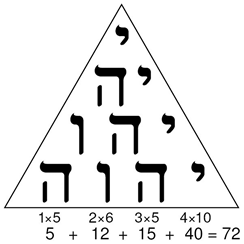
Jehovah was a sort of wrathful air-spirit with a penchant for blood offerings. According to esoteric history, he was a sort of “extraterrestrial” parasitic entity, known by the Gnostics as Yaldaboath or Samael, God of the Blind. These same sources state that, in his zest for power and his desire to elevate his people to sovereign status, Moses sealed a pact with this being, offering Yaldaboath the life essence of the human race in return for power for his people. Thus began a kind of indefinitely continuing blood tax, necessary to keep the demon-god sated, and by which it could consolidate its power over its people.
When the demiurge accepted and assumed its false throne as the one-true God, “I am that I am” was his first decree, quickly followed by, “thou shalt worship no other gods but me!” Certainly, the idea of a jealous God would have been a rank absurdity to the Egyptians, whose gods all worked together as complementary aspects of the Unmanifest. But apparently it appealed to the slave mentality of Moses’ people, and the despotic reign of spiritual bondage and carnal sacrifice that it initiated continues unabated to this day.
By the establishment of an only God, religion became a system of worship and control, no longer a means of connecting Man with Spirit.2 “Jehovah” introduced idolatry and sacrifice into the previously pure, pantheistic arena of religious worship and—in faithful imitation—Man followed in the footsteps of his “maker.” The “word” thus became humanity’s idol, to be worshiped as god. And the word was with God, and the word was God.
A Complex of Notions
All of the above is, at best, gross over-simplification (where is Abraham in Aeolus’ Yahweh-creation myth?), at worst, regurgitated neo-Gnostic garbage. I have left in the least contentious parts, since there is at least some overlap with what I now consider to be a more accurate interpretation of the OT scripture.
Now let’s juxtapose it with the 1st matrix realm of scholarly research, specifically A History of Israelite Religion in the Old Testament Period, volume 1, From the Beginnings to The End of the Exile, by Rainer Albertz, which mentions in its intro the Hegelian philosophy of history as God moving through the world.
Albertz asks, in the context of the history of Israelite religion, if it can be seen as a “spiritual process of the revelation of the absolute Spirit progressing dialectically, and the union and ultimate identity of the human spirit with it?” He answers with ‘The whole history of Old Testament religion is a constant battle and victory of thought over the natural’” (p. 4, emphasis added).
I will come back to this thesis question shortly. In his study, Albertz is asking whether the Old Testament has a theological center, or whether it is a range of “complexes of notions” strung together in a somewhat arbitrary way (p. 15). The OT is itself a historical process: if we trace Judaism back to its earliest roots in the Patriarchs, early Israelite families apparently worshiped a family god, and therefore were monotheistic only in a very local context. There was none of the exclusivity or intolerance that later became central to the Yahweh religion.
Albertz notes that one special feature of family piety is that the family god looks to the survival of the family, independently of any moral or immoral behavior on the part of its members—something that seems to be illustrated in some of the early chapters of Genesis, most overtly with Abraham, and then Jacob.
Circumcision—the genital mutilation and traumatization of eight-day-old babies—was the central practice of the covenant of Abraham and the Israelites, and eventually of Judaism. This encapsulates just how violent an imposition the “victory of thought over the natural” (via the Law) was; “abused children who rebel against their abusive parents [carry] a ‘seed’ of parental oppression [and may become] abusive parents themselves”—a seed of truth in Aeolus’ otherwise skewed view of the Jews.
The Torah accounts of the Israelites’ Exodus from Egypt, their violent struggle for freedom, beginning with Moses’ first act of murder, cements the Jewish tribal identity as a justified martial opposition force to encroaching, monarchical, non-Jewish groups.
The Exodus meant the Hebrew quest for a new land to inhabit became a kind of never-ending exile that was almost inevitably tangled up with the violent invasion, conquest, and occupation of foreign lands, via the slaughter and/or subjugation of previous inhabitants.
As Aeolus allows, the Israelites were an oppressed people from the start (not counting the Genesis stories from Abraham to Joseph), and the many years of trying to maintain more egalitarian communities—while being encroached upon by the non-egalitarian powers around them—led inexorably to their becoming an invading, not merely defending, army.
The Torah and the Tanakh thus became not just a religious blueprint for community organization, but a plan for local, and then global, conquest. This only happened via the betrayal of the original covenant, however, insofar as the original covenant prioritized freedom, and commanded an early form of democracy, was opposed to monarchy, hierarchical power structures, political oppression, forced enlistment in battle, inequity, and slavery.
So the original liberator spirit became, over the centuries, the aggrandizer spirit it was initially striving to get free from. The aggrandizer mentality that sees itself as the only way to live is threatened by all alternate lifestyles and all surrounding groups who do not live according to its Law.
It then assumes the mission of converting or colonizing other lands, as a means to preserve itself. Liberating and protective use of violence turns into the aggressive drive for conquest.
Group Identity Politics
Self-preservation and self-propagation are the two primary instincts of all biological organisms.
As the Patriarchs developed into the Yahwehists (under Moses), into Israelites into the Hebrews into Judaists, a wide variety of families and tribes constellated into a meta-organism, an über-tribe that was both a group identity and a god-form (eggregore).
Yahweh’s aggrandizer side gradually took over, partly created by, and partly creating, an aggrandizer people. The consistent element, the continuum between the two, is identity. God identity, group identity.
Does a group identity create a god, or does the idea of a god create group identity? Clearly, it is a bit of both. Making Yahweh the creator of heaven and earth amounted to the ultimate assertion of the superiority of that tribal-god identity. But there was also a grain of truth in the move, as follows:
If self-awareness (on both sides) is the sin qua non of the evolving relationship between the Divinity and Humankind—both the means and the end—then whatever god brings self-awareness to a group, becomes the creator God—an identifier of it, and thus a way to connect with it.
Returning to Albertz.
The Yahweh religion of the Israelites was the religion of a larger group, and therefore differed in both structure and content from a small family religion. The needs of a larger group are political. If we compare the Yahweh religion to other religions in the Near East, the distinction is that the Yahweh religion had a historical foundation and was not related to the validation of state power or stabilizing an already existing society.
It arose from the struggles of a social outsider group, struggling for freedom and the right to live. Its aim was
to provide internal solidarity for this group, and to detach it from a social order which was felt to be unjust, in the direction of a future social integration, which makes possible a freer and more equitable social life. . . . From the start, Yahweh religion is more closely focused on the correspondence between divine and human conduct. Given the particular situation in which it arose, it is characterized internally by the demand for loyalty within the group and externally by a tendency to separate itself off. . . . The God whom the Exodus group got to know through Moses thus comes from an area which was not part of the territory of later Israel. So this local tie can hardly be explained from Israelite worship of Yahweh either; rather there is some evidence to suggest that Yahweh already had his home in the mountain region south of Palestine and was worshiped there before he became the God of Israel (p. 47, 49, 51).
This implies that there isn’t a direct, one-to-one correlation between the God of the Patriarchs, as recounted in Genesis, and Yahweh, as officially identified in the subsequent books of Moses, Exodus etc., where Yahweh is assigned specific qualities, geographical locations, and so on.
Whatever arose during the Exodus is in the context of a people without a land, struggling for their freedom. The suggestion is that the god Yahweh is, in name and as an entity, older than Israel as a tribe—“a southern Palestinian mountain god” who became a “god of liberation” for the Israelites.
It was important here that he was a god who came from outside, an alien god who had not yet been incorporated into the structure of the Egyptian pantheon and was thus in a position to break up this religious system which gave political stability to society (p. 52).