Skandalon (Strategy of Demons)
Second Matrix Navigation: Avoiding "Divide & Conquer" Schismogenesis in Conspiracy Research, Part 3 of 3
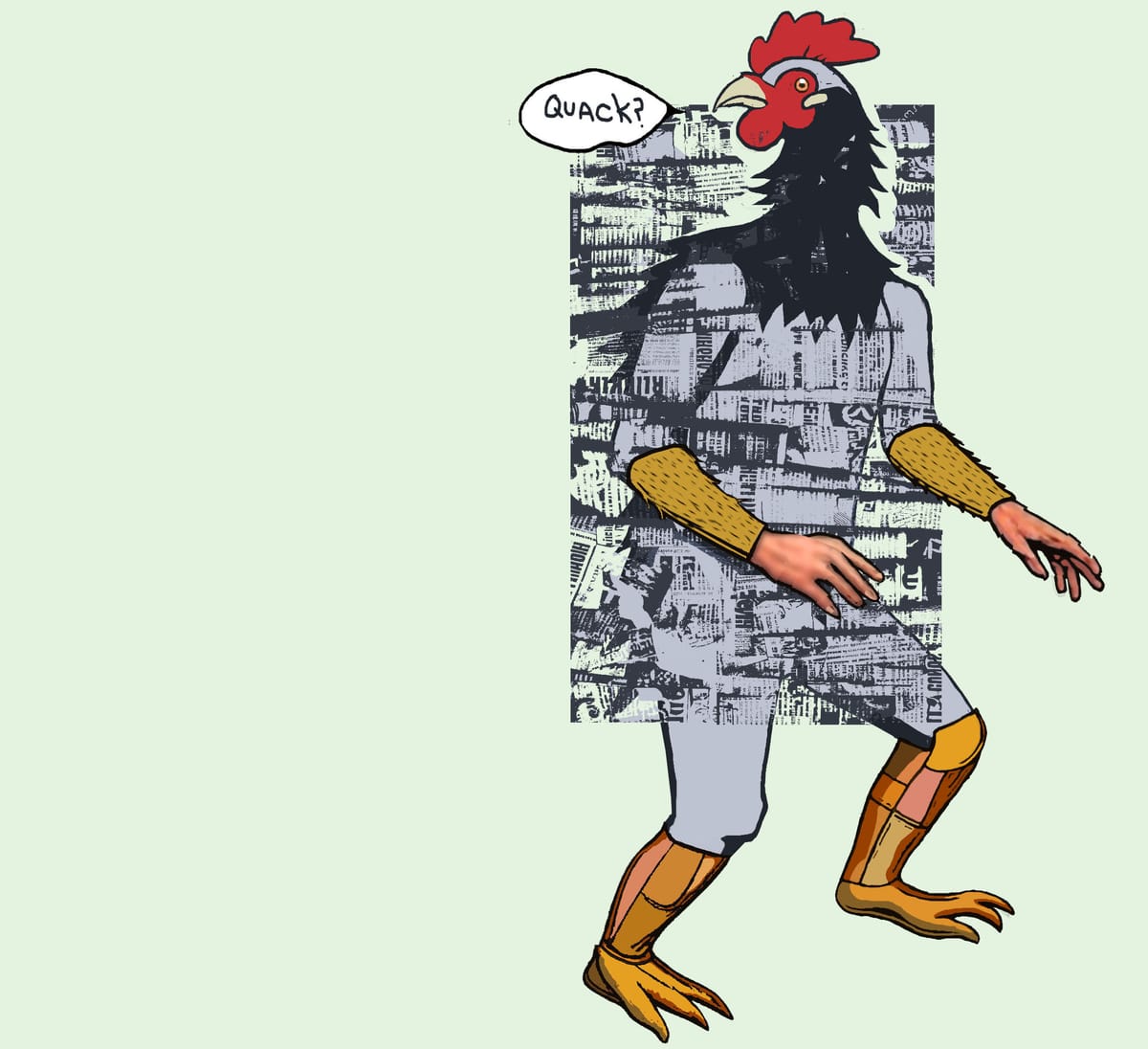
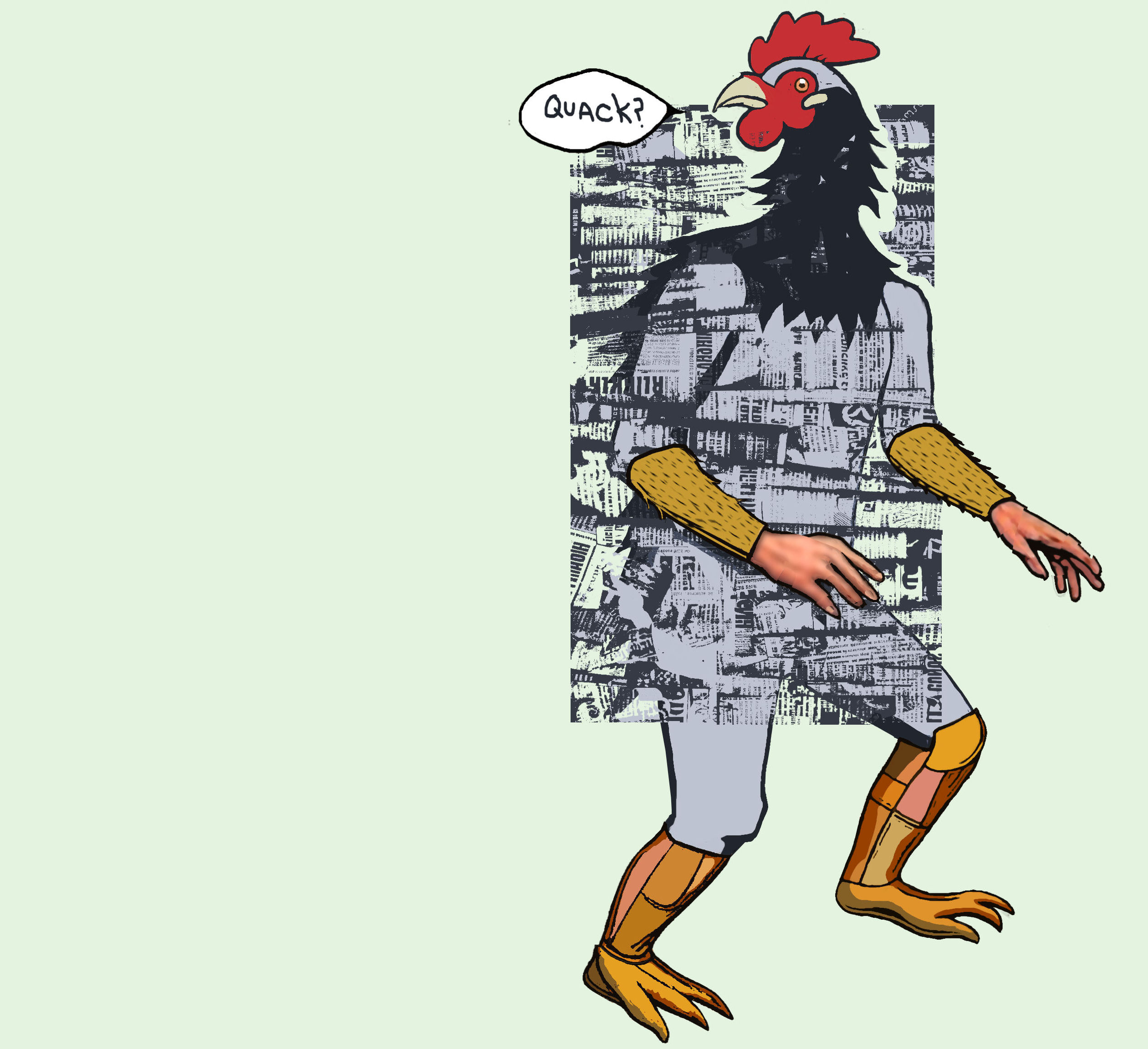
(Art by Michelle Horsley)
A SRA Monarch-Survivor
I recently listened to a self-described “Monarch” survivor of Satanic ritual abuse (SRA). While they seemed credible, I was struck by how normal and well-adjusted they seemed, for someone who had been through years of sustained hell.
This is not to say that I thought they were lying, or even deluded. But after listening to the full interview, I was left with the impression that their account was not especially helpful to a deeper understanding of organized ritual abuse and mind control, beyond the assertion that it exists.
So if this person is neither lying nor delusional, what is the third option?
My experience with survivors such as Ann Diamond is that they tend to be fractured, unstable, erratic, volatile, weirdly dissociated, or a mix of all of these. Part of what makes them credible is that they are not especially coherent, and that it is difficult to arrange their impressions into a linear narrative that other people can easily follow.
This is more or less exactly what I would expect from a victim of organized abuse and mind control, and it is well-known that such survivors tend to discredit themselves due to this fragmentation, dissociation, and lack of coherence. (I discussed this here:
 Jasun Horsley
This particular survivor is in their late-thirties and exhibited none of these symptoms; they were chatty, warm, and surprisingly casual, seemingly not at all conflicted about their experiences, or about going public with them (which presumably must entail severe risks). On top of this, both their accounts and their interpretations seemed too coherent, too tidy, and too easy-to-understand for such a dark and knotty reality.1
I use this example to make a broader point regarding the correlation between 2nd Matrix mechanics and “conspiratainment.”
To render accounts of such incomprehensible malevolence and suffering so easily comprehensible, it seems to me, risks turning them into fictionalized versions of the truth. The result is that, as with explicitly fictional depictions of evil, what is horrific and morally abhorrent becomes part of their sensationalistic appeal, rather than something that sickens and repels, as evil in its raw form always must.
Fascination with Evil
The problem with evil is that it does have an undeniable fascination, so the way it’s explored needs to be conscious and responsible enough to counteract that. Care needs to be taken to avoid making it titillating or exciting, or too intellectually or emotionally stimulating. Otherwise the horrors depicted become normalized.
This is very much what I think is happening via the 2nd Matrix popularization of SRA and mind control.
How do you spread awareness about organized malevolence without normalizing it?
The answer has to do with not trying to understand it too quickly—or make it understandable to others. Is the depth of darkness being discussed sufficiently matched by the confusion, sorrow, empathy, and moral horror that it must invoke as part of the effort to grasp it?
Is there the acknowledgment of a need to address these realities through responsible action, not activism or whistle-blowing, but a voluntary disengaging from what these accounts are revealing to be a quite literal hell-world—a finding of the exits?
Having the best intentions does not prevent hell-roads from being paved. Part of the problem is that we have to know the truth before we can speak truly; a victim of “SRA”—even the naming of it is problematic—while they have the advantage of direct experience, are in other ways the least likely to perceive or understand the full truth of what has happened to them.
What seems expedient to consider is that any groups that can achieve such a level of organized malevolence, subtlety, deceit—to the extent of not only almost entirely concealing their actions, but in the process shaping our social reality—are surely capable of generating fake disclosures and false narratives as a smokescreen around their activities—including (or especially) by using their victims to do so.2