Logos Pistis
Faith Logic, & Defining “Christ Outside of Christianity"
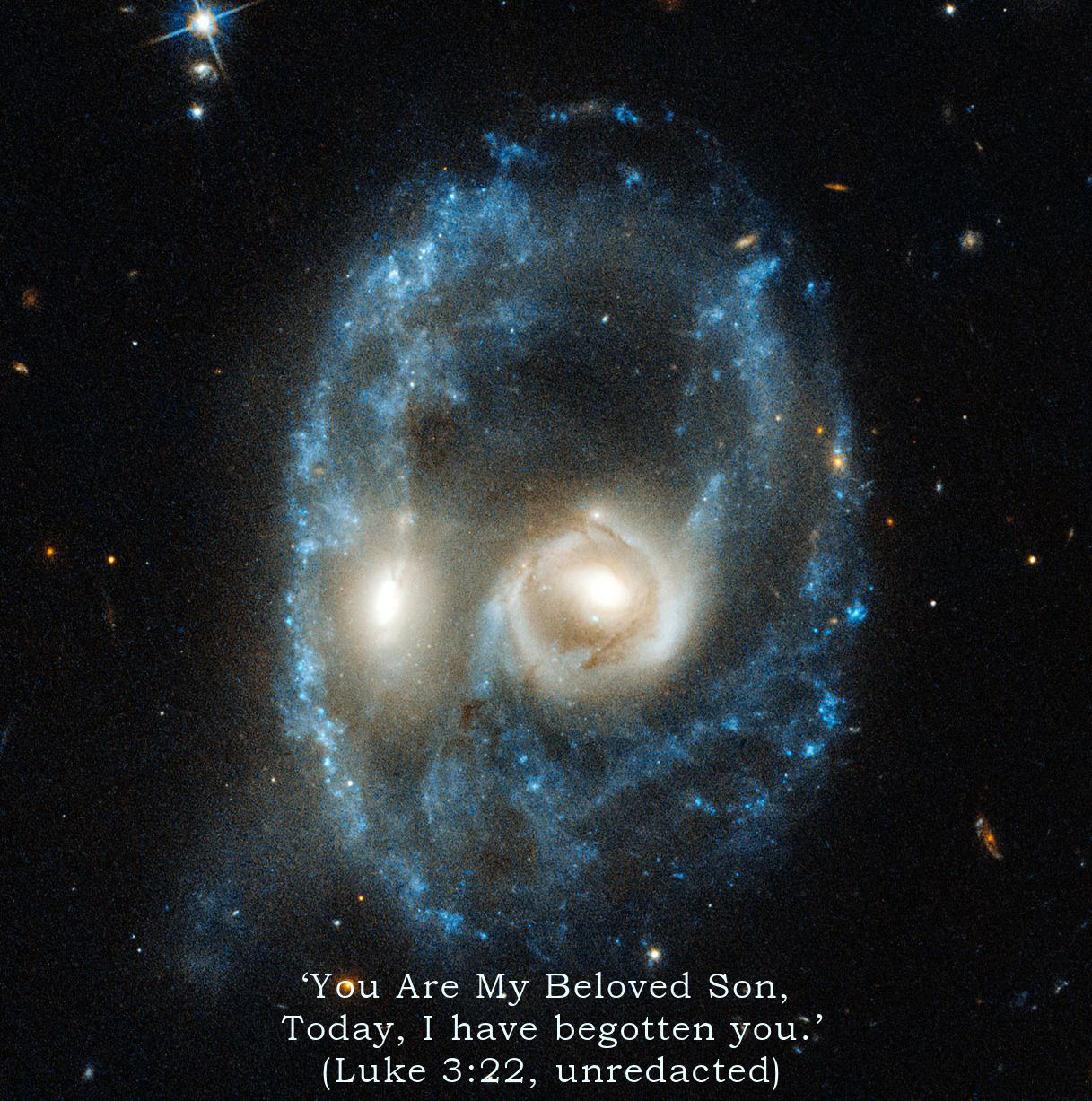
Theology tip # 1: You can’t get it right unless you’re willing to get it wrong.
The idea that we are created by God and yet we are sinners and God is going to judge us for our sins: this is baked into Christian belief and practice.
It is heresy for me to say, “Who the hell are you, God, to blame us for your mistake?
“We are your mistake, God. If you built us this way, gave us free will and so we fell into sin, then there’s a problem with your design.”
Christian belief posits that God is good and we, His creation, are born in sin. What’s wrong with this picture?
It’s shame and blame—not turtles—all the way down.
A Faulty Frame
“Christ outside of Christianity” has more than one meaning. A perhaps less obvious meaning (than finding Christ outside of Christianity) is that Christianity has effectively quarantined Christ; either that, or it’s a kind of quarantine from Christ.
Christ isn’t allowed into Christianity. He’s been banished.
I don’t think that he’s happy about that—but what do I know?
I know I’m not happy about it. I’m not satisfied with the Christian frame-up job of Christ Jesus. I think Christians have been getting it wrong since the very beginning, since the first gospel writers.
You can’t get much more heretical than that, can you?
What’s my motive? I want to ground Christ in something physical, tangible and real just as I want to ground Jesus of Nazareth—the historical Jesus, the man who walked the same earth that we walk—in something physical, tangible and real.
The Church admits (some of the time) to banishing the historical Jesus as irrelevant. Christians are warned not to get stuck on mere historical facts, that it might weaken their faith. But what about the historical (metaphysically real) Christ?1
The Difference Between Blind Belief, Logical Deduction, & Divine Revelation
So what does Logos Pistis mean? Does it mean faith in logic, the logic of faith, or something else?
Faith and logic working together is the main idea. It almost brings tears to my eyes to think of it—like the marriage of heaven and hell (another heresy, from one of the great Christian heretics).
The more I read about early Christianity and theological interpretation, the more it seems like logic has been banished from Christianity, just like Christ was banished. Logos is banished and logic is verboten.
You can go back to the historical records to see how it happened. Admittedly, I’m a beginner, so I’m probably going to get things wrong by oversimplifying them when it’s all quite new to me.
But what they seemed to be saying, at these various historical councils, and are still saying today, is: “Don’t be relying on that logic thing. Just listen to us: we’ll tell you what’s what. You’ve got to trust in revelation, and we’re the ones who have the revelations, and who can tell you which revelations to believe.”
For example, this is from Turning Points: Decisive Moments in the History of Christianity, by Mark A. Noll, on the Nicene Creed:
Not only does it succinctly summarize the facts of biblical revelation, but it also stands as a bulwark against the persistent human tendency to prefer logical deductions concerning what God must be like and how he must act to the lived realities of God’s self-disclosure (p. 51).
Certainly, I will admit that divine revelation is more important than logical deduction, and that we’re lost without it. But we can’t rely on revelation, because what about when we don’t have one? What do we rely on meantime? The Church?
If we’re relying on other people’s revelations, such as scripture, how are we going to test them? How are we going to determine if they stand up or not? Do we say, “Well, it says ‘John the Divine’ on it, so it must be good”? Or, “It’s in the New Testament, it’s canonical, so it must be true”?
Barring a blind faith in human beings we have never met—Jesus being the admitted exception, in some way—what does that leave besides logical deduction? What does that leave but to apply deductive logic (“concerning what God must be like and how he must act”) when we read, compare, research, evaluate, and decide: does this add up, or not?
Jesus @ 200%

One thing that doesn’t add up is that, if Christ Jesus is fully divine and fully human, that makes him a 200% quantity. I’ve lived and worked with that idea for decades. It’s a paradox and I enjoy paradoxes, and I believed—I still believe—that Christ Jesus was a unique historical event, and that God, somehow, fully incarnated through a human being, as never before or since (yet). So I thought, fair enough, whatever. 200% it is!
But the fact is, there is something wrong with this math. It is a little too close to 2 + 2 = 5.
The only alternative to logical deduction, when we can’t rely on (our own) direct revelation, is blind belief and passive submission to authority.
That’s Christian dogma: we have to believe to be saved.
This means we’ve got to believe blindly, because who can get their head all the way around this Christ Jesus thing? Who was he? How did it happen? Was he born of a virgin? It says so in the book, so we’d better believe it! Why was he born of a virgin? What does that imply about sex and conception and how God works through us? Who knows? Just believe it, damn you!
So is this a case of believing scripture, or of believing authorities that tell us what to believe about the scripture? If we don’t really understand scripture, how can we believe it?
Is believing without understanding worth anything—or does it leave us at a perennial 50%, looking up to an impossible—because unlivable—ideal?
Virgin Conception: Says Who?
The virgin conception is only mentioned in two out of four gospels. Why not all four? It’s a hugely significant event, so you’d think they could all agree on it.
Mark’s gospel is generally thought to be the oldest, but there’s nothing about Jesus’ birth in there at all. Bit of an omission, isn’t it?
John’s gospel is the most profound, the most spiritual, the one that talks about the Logos and the incarnation in the most esoteric terms, and it doesn’t mention it either. You would think John would consider it relevant if Jesus was born of a virgin, wouldn’t you? It’s an important detail—so why didn’t he mention it?
Maybe because it didn’t happen like that?
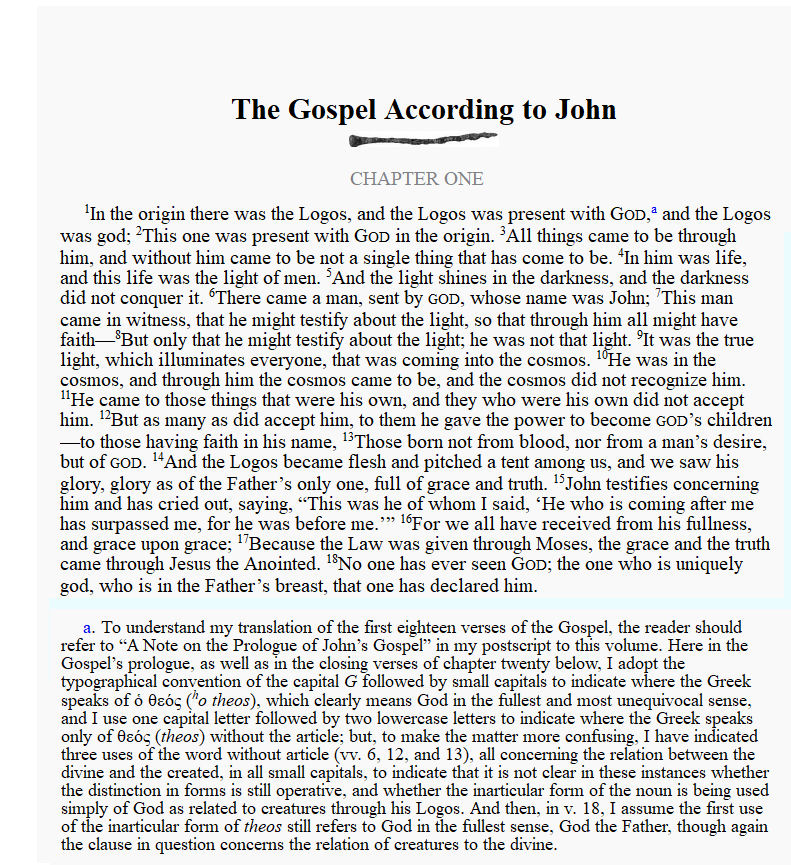
Despite the absence in John’s Gospel, this excerpt (specifically the line “the Logos became flesh”) was central to the assertion and establishment, at the councils of Nicea and of Chalcedon, of the dogma that Jesus was BORN divine, co-equal with GOD the Father, as compared to the Adoptionist view, that:
a) The divine Logos or Son was a secondary emanation of God and therefore not equal to it
b) Christ-Logos was not born as the (son of) man, Jesus, but entered into the body of Jesus, whether at the baptism by John the Baptist (as Rudolf Steiner had it), at the crucifixion, on the resurrection, or with the ascension.
God-Man or Man-God?
The standard Christian view makes Jesus, a mortal man, the same as God, the totality of existence, from the beginning until the end of time. Alpha and omega.
This was imposed onto scripture, historically, between the 4th and 5th centuries, via the appliance of both priestly and political pressure that ousted all who disagreed and turned them into heretics. Yet to this day, there are churches that do not subscribe to this view (e.g. the Assyrian Church of the East).
The ostensible rationale for asserting Jesus’ full divinity was apparently that, unless Jesus was equal to (the same as) God, then he could not deliver humanity from sin. It is unclear to me why this is so, and I suspect there were other, either unconscious or covert reasons for the establishing of the 100% divinity of Jesus, from miraculous conception on, mysteriously (or nonsensically) coexisting with his 100% humanity.
The clearest impression I got, while reading Noll’s book, was that these early Christian social engineers did not fully understand scripture/the nature of Christ themselves, and that they did their best (?) to wing it, in such a way as make it coherent and digestible to the majority, while at the same time compatible with their own socio-religious aims, and with the sociopolitical aims of the Emperors.
This does not seem like an example of following the example of Christ.
Assertion of Belief
You have a church that starts with the Apostles but quickly becomes something more socially oriented and political, until pretty soon you’ve got these priests working in cahoots with emperors.
In order to continue to have authority around these things, regarding the question of who Jesus was and what’s correct to believe, they have to appear to be 100% sure about it. They can’t just say, “We think it was this, but it could have been that. We’re not really sure if Mary was a virgin, but she might have been, it depends which gospel you refer to. So you’ll just have to make up your own mind.”
Who’s going to follow that?
Essentially, it would amount to the Church saying, “You’ve got the scripture. We’ll talk to you about it, but you have to work it out for yourself. It’s you and Christ, you and the book. We can give you some pointers here and there, and we can share and swap notes with you; but that’s it. Beyond that, you’re on your own.”
That might be honesty and integrity and nurture and foster individual responsibility; but it’s not what most people respond to as authority.
So of course they had to feign belief, conviction, certainty, knowledge—starting among and with themselves.
It is a weird kind of doublethink at work. Even reading this condensed history, it became clear to me that these religious leaders didn’t really know what the truth was, obviously, because they were arguing about it. There was a schism.
There were schisms even before Nicea, of course, going as far back as the Apostles. To circumcise or not to circumcise: that was question back then. The first schism.
How ironic: there was a split between whether to split everybody’s penis or not. Fortunately, Paul won that struggle session (though you wouldn’t know it by looking at the statistics over the past hundred years).
The Uncertainty Principle
When it comes to our relationship with logos-pistis, there’s always going to be an element of uncertainty. Revelation is always going to be partial, and both faith and logic have their limits.
If God is existence, existence is always moving. Jesus is a moving target, as well as a thief in the night.
The imposition of belief as a form of pseudo-certainty is a kind of contagion. To be a Christian, in most societal frames, requires us to imitate that. We have to make belief feel like certainty, even though we know full well that we just don’t know.
If we put our faith in those who say they do know, the reasoning goes, then we can believe with all of our being that it’s true, and so we’ll be saved.
This might work for some, I suppose. I’m not dissing the whole of Christianity, because we wouldn’t even be having this conversation without it. Blind belief may work for millions, or billions, of people. Certainly it’s better than the alternative, if the alternative is being woke, LGBTQ, liberated, progressive atheists.
But it’s not for me, and if you’re reading this then it’s probably not for you either.
It might work for a while. But it’s not the example that Christ left us. About this, I have some certainty. Christ wasn’t a follower. He wasn’t a blind believer.
This isn’t to say that we can’t know things at a deep level, or that we don’t know certain things. We know in our bodies whether the earth is round or flat, even if we can’t bring that knowing to the mind level (and we can’t trust the authorities to tell us).
And we know things about Christ Jesus and God too, in our bodies, hearts, and souls. The mind should always be the last to know.
Faith is being moved and guided by that soul-deep knowing, but it’s not a mental construct and it shouldn’t ever be pretzeled into a cognitive certainty or conviction.
Chop wood, carry water: that’s about all we can know for sure, at the mental level. But, praise Jesus, it is enough.