Hecate to Judas
33 Books That Changed My Life (for Better or Worse), Part 4
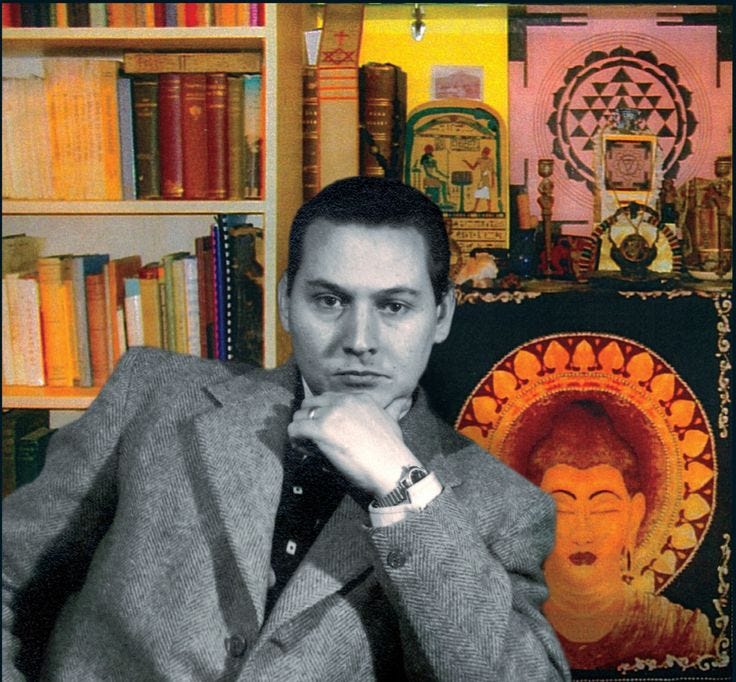
27. Hecate’s Fountain, by Kenneth Grant (age 34).
Of course, I include this only with hesitation, but the fact is that I was hugely impressed by Grant’s writings when I first read them, in my thirties, and, costly as they were (and hard to locate before the days of Amazon, etc.), I must have read half a dozen of his books in all. His perspective significantly informed my writing during this period, most of which I now consider well past its sell by date (i.e., rotten). Nonetheless, I include Grant here, if only because—as with Pauline Kael and Paul Bowles—it led to a correspondence with Grant (in London, in 2002-3) that included his endorsing several of my creations, The Lucid View, Matrix Warrior, and an unpublished small work, The Book of the Adversary, making it the third such case of personal validation from an older writer that I greatly admired.1 Kenneth Grant’s work mixed up Crowley, Lovecraftian mythos, and Grant’s own occult investigations, intuitions, and so-called discoveries with the OTO. I had a dream-vision of my own during this period, of a young Kenneth Grant participating in an occult evocation of a being.2 His occult exegeses were unusually dense and complex and fascinating and he was perhaps the only occultist writer I had found who included both UFOs and Castaneda in his work. With hindsight, I would say that all reading and corresponding with Kenneth Grant really did (to say nothing of dreams of becoming a god) was give me more bricks and mortar for building my Tower of Babel, as exemplified by the grand folly of Homo Serpiens (which Grant also validated in its early form, as Apotheosis of Species). I was playing with occult knowledge (and psychedelics and lucid dreaming) with roughly the same degree of moral awareness that an infant plays with its own feces. Ironically, the fact that Grant validated me during this period is perhaps the best evidence I have, regarding his own lack of discernment (he was in his 70s at the time). Or perhaps I can be more generous and allow that Grant saw something that I couldn’t see at the time, and was encouraging me to persist in my folly, trusting I would eventually grow out of it (which I have, mostly).
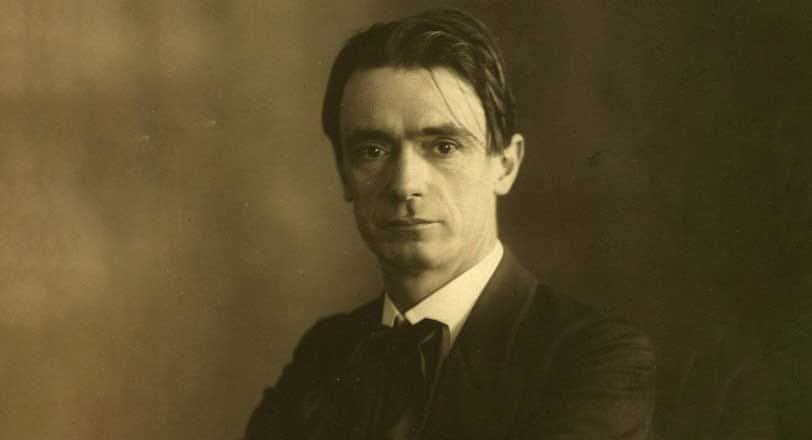
28. The Sun Mystery, by Rudolf Steiner (age 40).
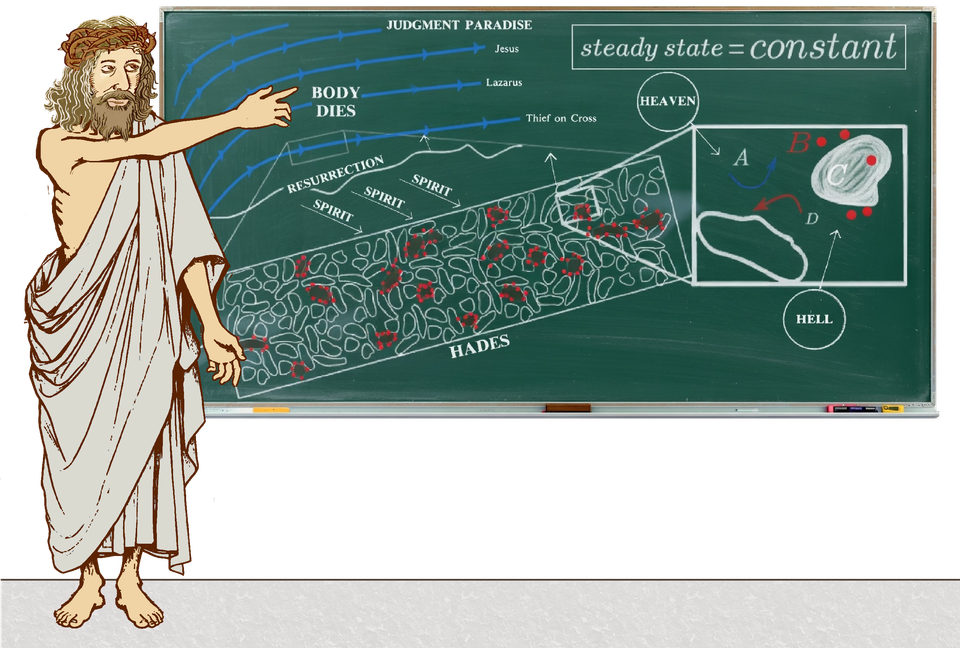
I cite this particular book as probably the first Steiner I ever read. While the impact it had on me at the time was relatively small, it requires citing as Steiner’s official entry point into my inner landscape. It wasn’t Steiner’s Christology that got my attention at first so much as his Lucifer/Ahriman dyad, which sparked some wild imaginings that made it into Homo Serpiens in its final stages. That said, I was at once taken by his perspective on “the Golgotha event,” and also incorporated it into my Aeolian channel. The mystery with Steiner is why it took me as long as it did to pay more attention to him (I must have been at least dimly aware of him as early as my twenties, but chose Blavatsky and Theosophy instead). Once I had discovered him, it took me even longer to seriously dive in. I’m still not sure if I have. More than any other author on this list (not counting the scriptures), Steiner requires a truly daunting level of commitment to even begin to get to grips with. After the last three years spent wading in, I’m still unsure of what to make of it. I have about a dozen books of Steiner’s to read this year, and the more I dive, the more sense I am able to make of his descriptions of reality. At the same time, the more aware I am of the assumptions and unverifiable assertions so much of it consists of. Perhaps the least appetizing, but also most potentially fruitful (literally), aspect of his work is also the part that can most directly and assuredly be confirmed, that of biodynamic farming. Eventually, I hope to be testing it out at our vineyard. Confirming his nine spiritual hierarchies or two-Jesus theory is going to take a bit longer.
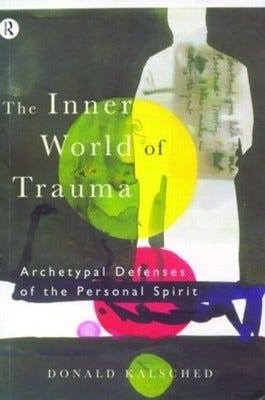
29. The Inner World of Trauma, by Donald Kalsched (age 40).
The observant reader may have noticed how few standout books are listed from my thirties. This is no doubt due to the fact that we are far more impressionable and more easily influenced when we are young; it is also because I was jumping from one literary obsession to the next in those earlier years, mashing them all together into a worldview that was only barely coherent (as evidenced by those early books). Later in life, a single book was able to cause a shift that took years to integrate and apply. Such was the case with this book, which I read at the age of 40, on a recommendation from a Jungian therapist. With hindsight, it was perfectly timed with the beginning of my mature phase of reading, writing, spiritual seeking, and self-examination. It also corresponded with the painful culmination of my helter-skelter heaven-storming, my “Icarus period.” Kalsched’s book is a series of case studies (including dreams) as a means of mapping the inner landscape of the fragmented psyche and examining its architecture and inhabitants. It was a window onto a whole new perspective regarding my occult explorations, and over time—with Whitley Strieber as my primary mirror, but also Castaneda, and later Crowley, John De Ruiter, et al—it allowed for the growing realization that a significant portion of my “shamantics” might be largely the symptomology of early sexual trauma. Prisoner of Infinity is the only one of my books that builds its thesis around Kalsched’s book, but all the others since then are, to some degree, informed by it, or at least by the insights it led me to.
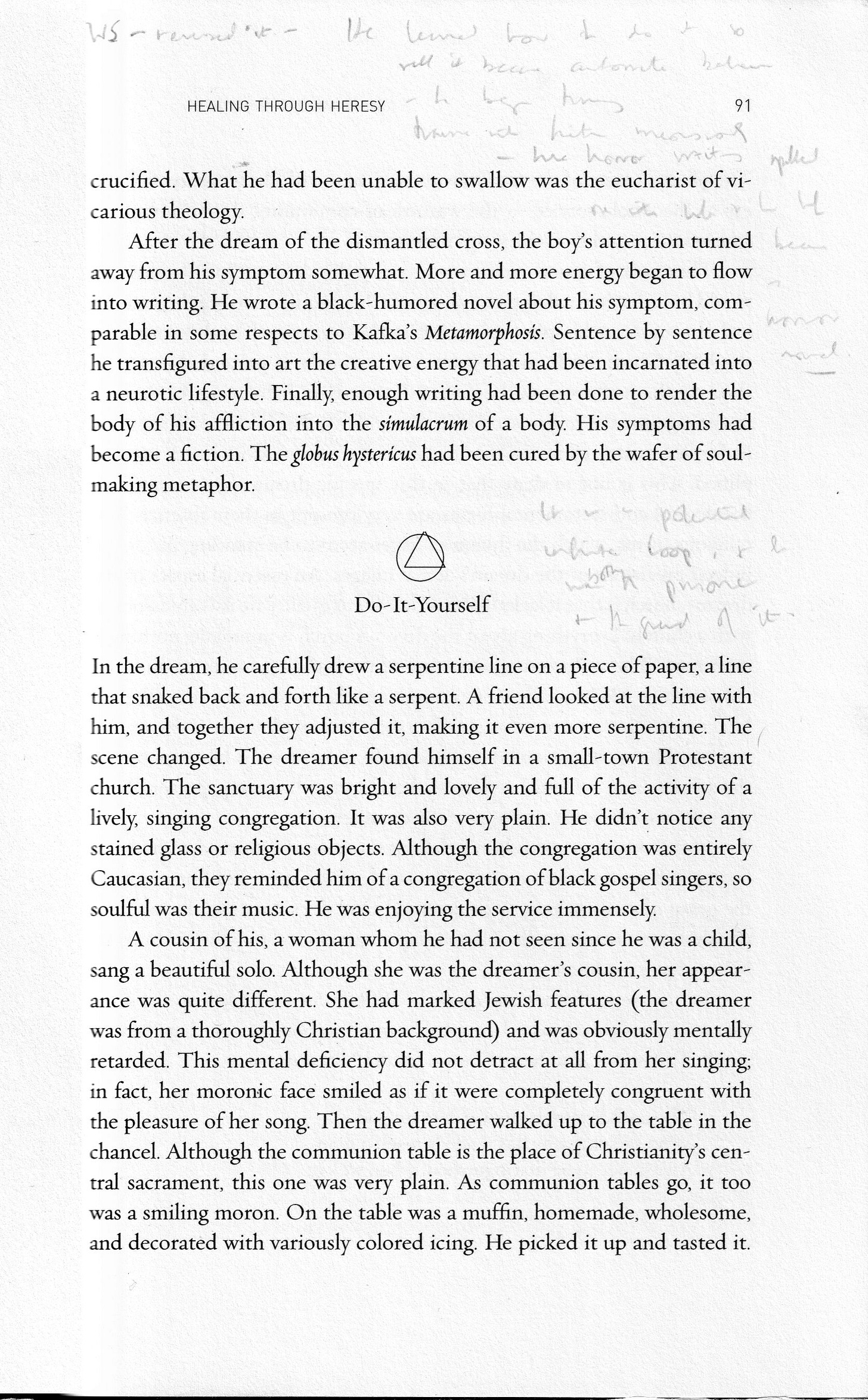
30. A Most Accursed Religion: When God Becomes a Trauma, by Greg Mogenson.
A few years later, I read this book, also by a Jungian therapist, though I have no recollection of how I first heard about it. In fact, I read the book in two halves, at two different time periods, over a number of years, only reading the second half of the book while I was also working on the second part of Prisoner of Infinity (having left it for a time). As anyone who has read my own book knows, while I was finishing up Prisoner, Mogenson’s text interacted directly with the Strieber material—and with my own consciousness—until it was as if Mogenson’s work became a character in the narrative. The title perhaps conveys enough about the book’s contents to not require further summation. It is a short book that spills over with insight.