Gnosticism Revisited: Competing Church Claims to Knowledge
The Christ Strand from Homo Serpiens, Revised & Redacted, Part 2
1st series (Judaic Strand from Homo Serpiens): Part One Part Two Part Three Part Four
Audio at the end. Old Homo Serpiens text in bold.
(NB: I am still well below the requisite number of paid subscribers & so the bulk of new content is behind the Paywall.)
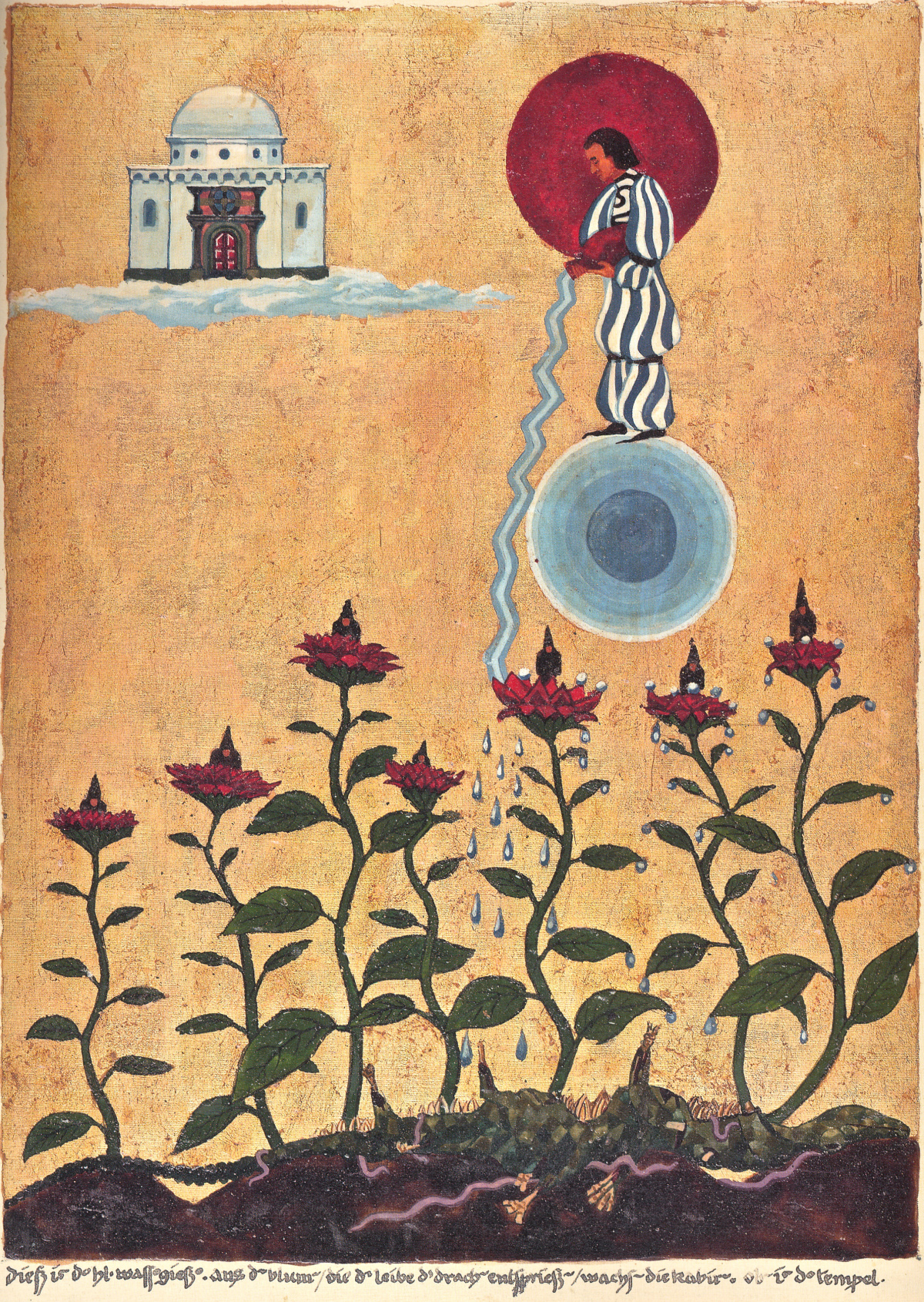
(“Watering Hades” by Carl Jung)
Kingdom Postponed
“Ever since the Mystery of Golgotha, the power of Christ is united with the Earth.” —Rudolph Steiner, The Sun Mystery & the Mystery of Death and Resurrection, pg. 26.
Though he succeeded in establishing a new paradigm, Jeshua’s error was in underestimating the true nature and power of the adversary and, by the same token, in overestimating humanity’s capacity to embrace and embody unitive consciousness. [Not sure about this, but it is a dumbed down, literalized riff off of Dostoyevsky’s Grand Inquisitor.]
Christ did not fully assimilate Yahweh into himself, and the Christ archetype [impulse] did not fully supplant that of Yahweh, but was absorbed into it. Jeshua may have temporarily exposed Yahweh’s regime as the blood-soaked tyranny and soul snare that it was; he may have offered the possibility of escape—“salvation”—to those trapped within it. (“But as many as received him, to them he gave power to becomes the sons of God” John 1:12.) But humanity was left to make the choice for itself, and so far at least, it seems to have preferred worshipful slavery (Yahweh) to the apotheosis of freedom offered by Christ. [Messy but mostly credible Gnostic rehash.]
Catholic doctrine states that God offered up the soul of his only son as bait for Satan and so freed the world from sin. The magikal [bleh] perspective sees it somewhat differently. Christ (as God-man) offered up his own soul as bait for Yahweh, the demiurge, as a ruse to free humanity from Yahweh’s soul-sapping dominion. [Over-literalized to the point of incoherence; a grain of theological truth that doesn’t go deep enough into the earth to crack open and bear fruit.]
“Ye are of your father the devil, and the lusts of your father ye will do. He was a murderer from the beginning, and abode not in the truth, because there is no truth in him. When he speaketh a lie, he speaketh of his own: for he is a liar, and the father of it. And because I tell you the truth, ye believe me not.” —John 8:44,45
Meanwhile, having fused with Yahweh (and in order not to abandon his “flock”), Christ “descended to Hades.” The magikal implications of this are obscure. The suggestion is that, in the process of doing battle (or making peace) with “the prince of this world,” Jeshua merged his consciousness with that of the Earth. “Now is the judgment of this world: now shall the prince of this world be cast out. And I, if I be lifted up from the earth, will draw all men unto me” (John 12:31,32).1
During this cycle, the old devil Yaldaboath appears to have been undergoing a process of reform amounting to re-alignment with his true, cosmic function. The inevitable side-effect of this “corrective process,” however (i.e., of living inside the energy field of this aberrant being and being slowly converted to its dark vibration), has been the total corruption of the human race, in what might best be termed contagion. The more “repentant” and purified Yaldaboath gets, the more contaminated and diseased the Earth, and by extension humanity, has grown. Man has become a devil, and “the Devil,” in turn, humanity’s only chance for salvation! When Christ went down to Hades, it was the last phase of this “transference of power.” Christ became the spirit of Earth, and Man, as such, became the adversary.
[There is a grain of an interesting idea here that is Steinerian—the separation of good and evil in the energy field of humanity, whereby, for the good to become better, the evil must become more evil; but it’s drowning in a sewer of sub-Gnostic imagery. Some early Gnostics did speak of “the devil” as some sort of emanation or effluence of the demiurge, but the idea of Yahweh/the demiurge as evil, per se, is a misconception that leads to the primary Gnostic error of Matter as evil.]
Judas, Peter, and Paul
Whatever the case (and these are the muddiest of waters [which as Aeolus I mostly chose to wallow in]), the crucifixion was necessary in order for the resurrection to occur. First of all, the demiurge Yaldaboath had to be deposed, and to do that he had to be routed. Judas helped with this operation by “betraying” Christ.2 As for Peter, he was simply human, all-too-human; his cowardice was the result of a lack of trust, or vice versa. As such, his soul was the perfect tilling ground for the Accuser to plant his flowers in.
Peter’s feet of clay caused the foundation of the new serpent-strand Church to tremble, just when it most needed to hold firm, and the launch was aborted. If Christ knew this would happen, it might explain why he called Peter “Satan” right after giving him the keys to the Kingdom and naming him the “rock and foundation” of the new Church. As Lord of Matter, Satan is as solid a founding stone as one could wish for; at the same time, Satan-Yahweh, the demiurge, remains (in part thanks to Peter) the devil in the deck of the “Christian” paradigm. [Again, conflating Yahweh with the satan was an intuitive leap too far.]
When the paradigm failed to fly, even after Christ’s sacrifice, it was necessary for Jeshua (now fused with the soul of the world and spliced with Yahweh) to find himself a spokesman to build a new, external religion. Enter Saul of Tarsus, “the chief of sinners,” soon to be known as St. Paul, “the sprouter of lies.”3
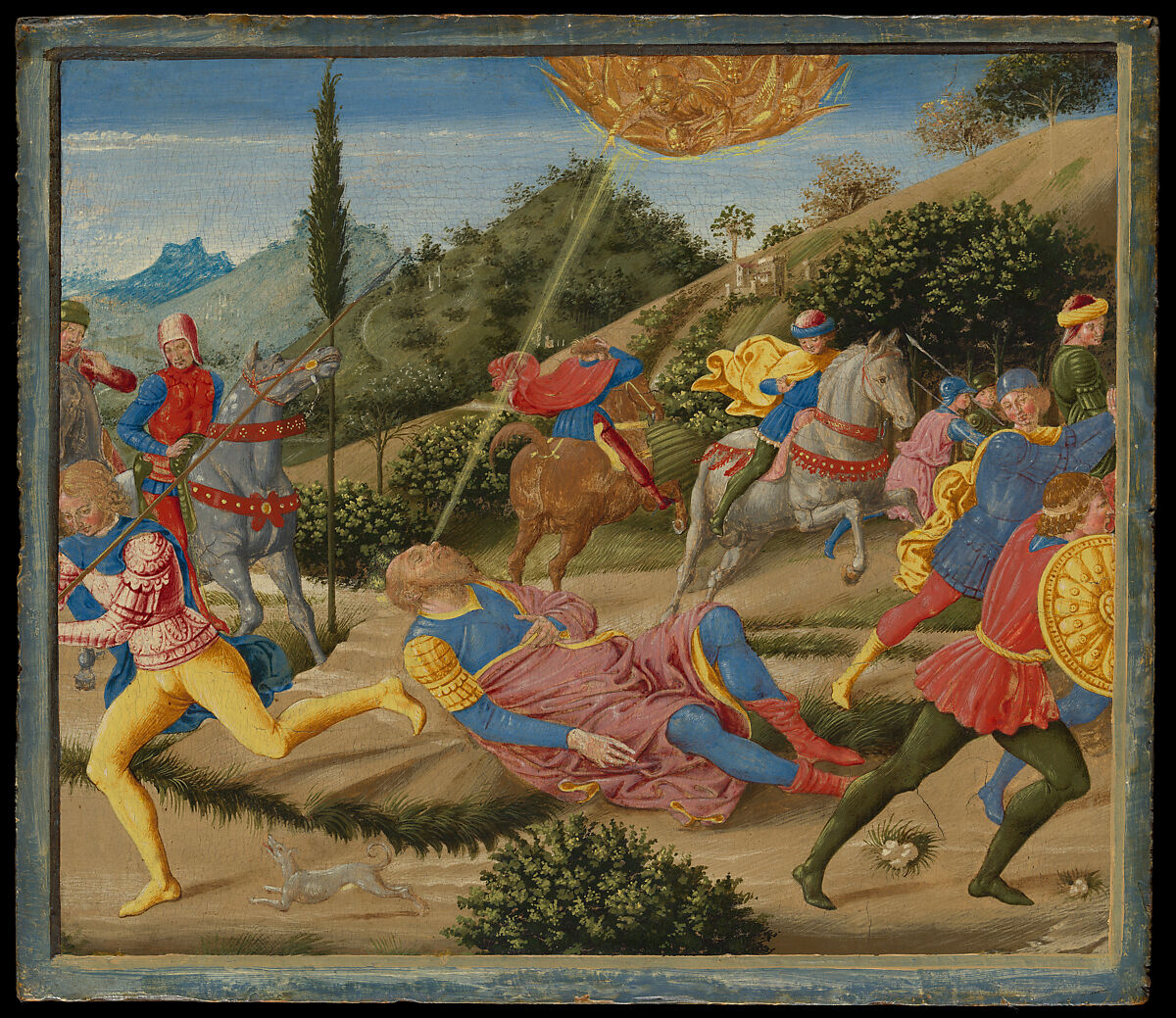
It was Paul who turned Jeshua into a bona fide God (understandably, since Jeshua appeared to him from the other side of death [actually the gospel of John did that, though the Paul letters predate it]), and it was Paul who adapted the archetype to fit the masses, specifically the Greeks and Romans. The essence of Paul’s Christianity was “salvation”; it stated that God sent his only Son into the world as ransom, in order to absolve humanity from sin and free it from Mosaic law.
This last point is the most pertinent, because [here is] the spirit of Gnosticism: “Christ has redeemed us from the curse of the law, being made a curse for us. But if ye be led by Spirit, ye are not under the law” (Galatians 3:13, 5:18). Paul made official writ what Christ had acted out: defiance and annulment of the law of Yahweh. Paul may have been a deceiver, like Peter (though of a far more ingenious variety), but his deception was a strategic one and closer in spirit to magik than politics. Paul deceived the world to fulfill a greater agenda, that of Christ himself, thereby furthering the evolutionary design. [Woolly waffle, unverifiable, however “true,” liberally spiced up with A. Kephas’ slandering of his namesake: who is the real deceiver here?]
In relation to this complex process of subterfuge, it pays to cite Ernest Scott’s succinct description (in People of the Secret) of the process by which a religion may become divorced from—and finally at odds with—the core of wisdom that first inspired it:
Paul’s Christianity was no different from any other external religion, in being both a snare and a test, a filter through which only the most refined of intellects might pass, like ghostly camels through needle’s eye. It was designed as an abstract system of (super-) natural selection, one that responded not to physical but spiritual adaptability—in a word, awareness.
Such deception was necessary to protect the gnosis from the gross and the unfit, and to assure that only those acquainted with the excluded levels of the teachings—those with personal experience of the Spirit (the kingdom within)—might partake of the sacred vine. Without this safeguard, the grapes would have been crushed underfoot in no time. As it is, Satan seeks out the weeds and keeps the garden healthy and clean, while Christ, the bee in winter, stays safe inside his honeycomb, waiting patiently for Springtime.
I will comment on these last, more salient passages over the Paywall, for the self-elected few (hint hint).