From C.G. Jung to P.K. Dick
33 Books That Changed My Life (for Better or Worse), Part 3
17. Psychological Reflections, by C.G. Jung
I am not sure how, but somehow I got a hold of this Jung compendium (perhaps from that same library?) while I was still bumming around Assilah, and once again, it was one of the only books I had to read for a significant period. Jung influenced my worldview from early on (I read The Undiscovered Self at twenty-one), into my thirties and forties. This is especially true if I include indirect influence via two Jungian authors (who I will get to next week). Jung is a relatively benign influence compared to Crowley, though they shared certain interests and approaches (Crowley wrote disparagingly of Jung in Magick without Tears, as I recall, which suggests that Crowley was influenced by Jung. Crowley had the tactic of deriding his influences after stealing from them; he advocated it as a “magickal” principle.) Though I now look at Jung somewhat askance—his Gnosticism, his downplaying of Christ in his “system,” his occultic leanings, his association with Allen Dulles, his avocation of Abraxas—his work (along with Freud’s) informed Prisoner of Infinity, for the better I think, and his principle of individuation, though perhaps not original to Jung, is one I still find useful. If I had to name a failing of Jung, it would be that—in common with Castaneda, Strieber, and Crowley, and unlike my general impression of Rudolf Steiner—he tended to “get high on his own supply.” (Since I wrote this, I just found out about Lyn Brulet, an Australian author who has written and spoken about Jung’s possible sexual traumatization by Masonic ritual as a child, and how it bled into his Red Book mythology, and therefore into his entire psychoanalytical opus.)
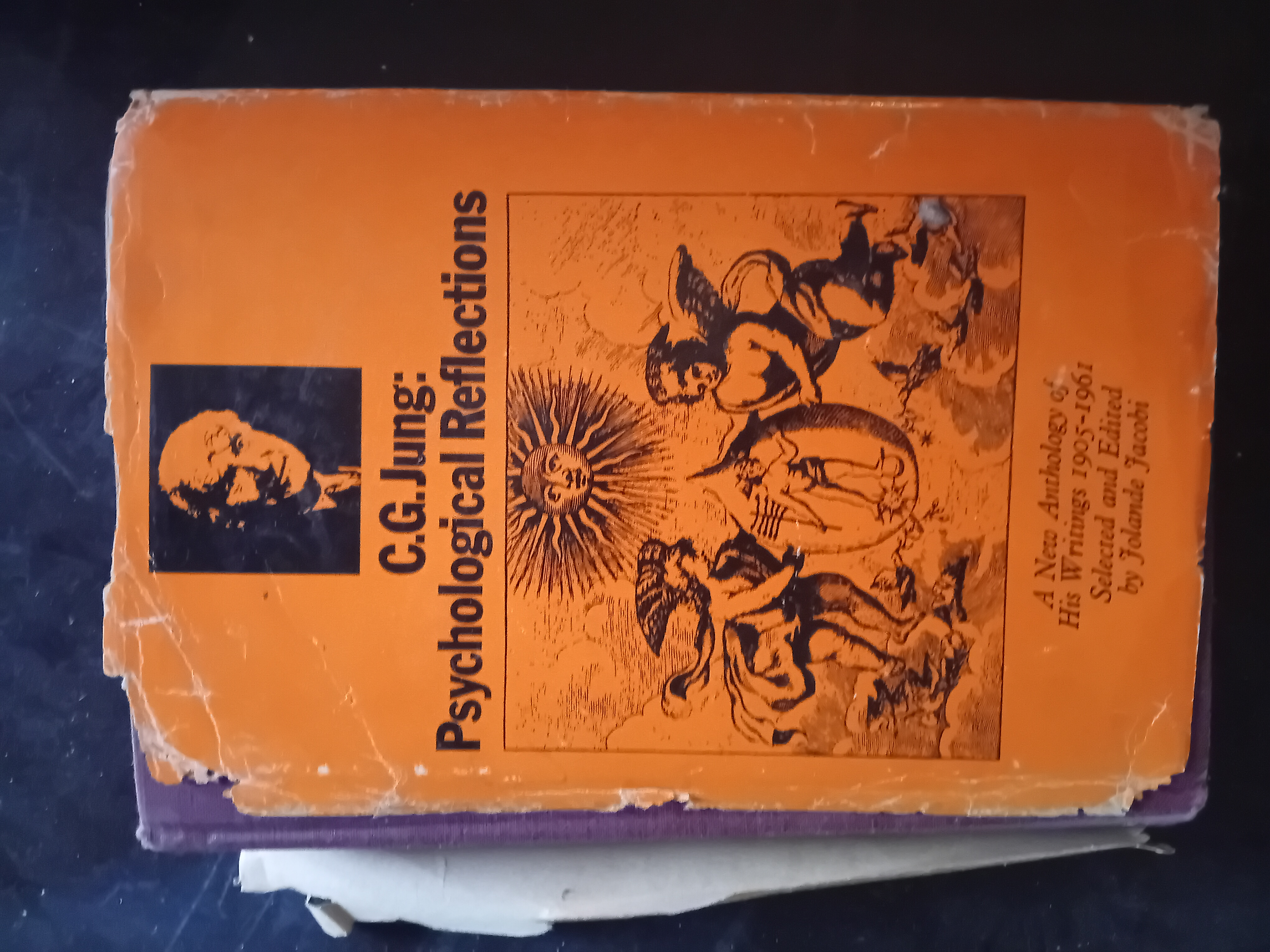
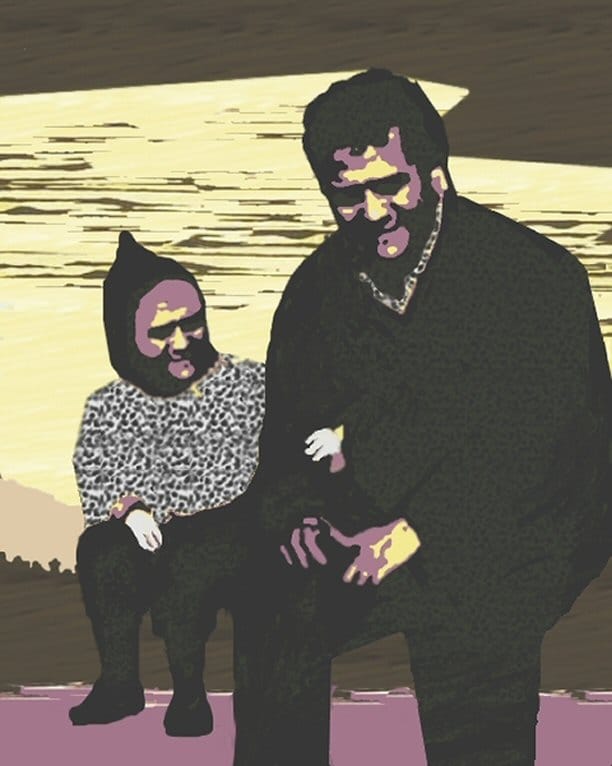
(Actual copy)
18. The Gospel of John & The Book of Revelation (age 25).
Better late than never, I finally read the Bible cover to cover at the age 25, while living in Pamplona. I was especially taken by this Gospel, and remember saying to my Irish Catholic friend at the time that it was the one in which one can best hear the words of Christ (he agreed, though historians might not). Of course, all the Gospels would have impacted me at the time, and consolidated a growing awareness of an affinity (and identification) with Jesus of Nazareth. This led to visionary dreams, as well as a sojourn to a Benedictine monastery, where I showed up with a large crucifix hanging on my chest. In short, I became a kind of Christ-ian pilgrim, though there was no conversion moment to speak on unless it be via dreams. It was during this time that I first read that the scholarly guess for the date of the crucifixion was April 7th, my birthday, and also had a dream in which I was ascending over a crowd of people with bleeding gashes in my wrists (which would be more historically correct stigmata). Burning theological questions such as whether Jesus was the Second Person in the Trinity—i.e., God the Son as well as the son of God—or Christ at birth or only later on at the baptism, crucifixion, resurrection, or ascension, didn’t trouble me much, in those more innocent times. From roughly this period on, I traveled with a tiny portable New Testament, given to me by an American in Navarra, Tad Gayle, now sadly deceased. I still have it.
I presume it was also the first time I read the Book of Revelation during this same period. It is hard for me to understand what exactly I responded to, except that it provided fuel for my rapidly growing apocalyptic intimations (and aspirations). I believed it was by the same John as the Gospel writer (as Rudolf Steiner also claimed), though most scholars now disagree, and it’s hard to imagine two similar books with a greater difference in style and tone. The last two times I read it, in 2025, I found the book baroque, leaden, pretentious, and oppressive. It does not cause my soul to sing as does the Gospel of John, and much of the New Testament, at least when I am in a receptive mood. I’m willing to admit this is due to my own failure to tune into the author’s brain-state, though in my thirties I even visited the cave in Patmos, where allegedly it was written. The book’s influence on my thinking in my twenties (when I did respond to it) may not have been entirely positive, all mixed up as it was with psychedelic-enhanced illusions of grandeur (I believed I was Kephas reincarnated, and one of the two witnesses of the Apocalypse, Elijah and Enoch, though I am not sure which one I thought I was). The main elements that have stayed with me over the decades, and that still feel meaningful to me today, are the Mark of the Beast (hard to dismiss in 2026), the 144,000 souls who will survive Judgment Day (more than once I have worked out what % this would be of the world population), and the idea of God spewing out the lukewarm. Most of the other images leave me cold, and the notion of a vengeful Christ with a flaming sword shooting out of his mouth lacks much emotional appeal.
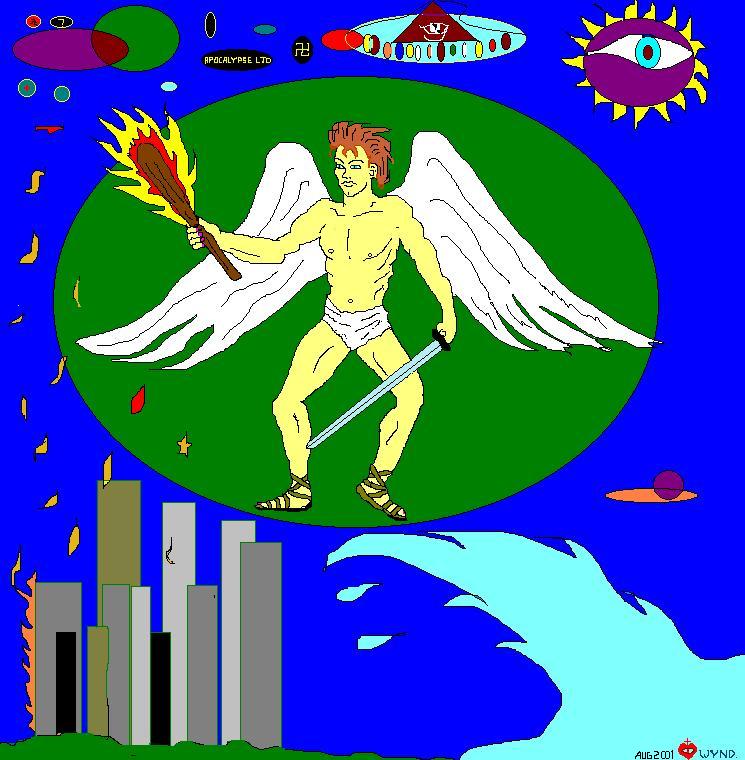
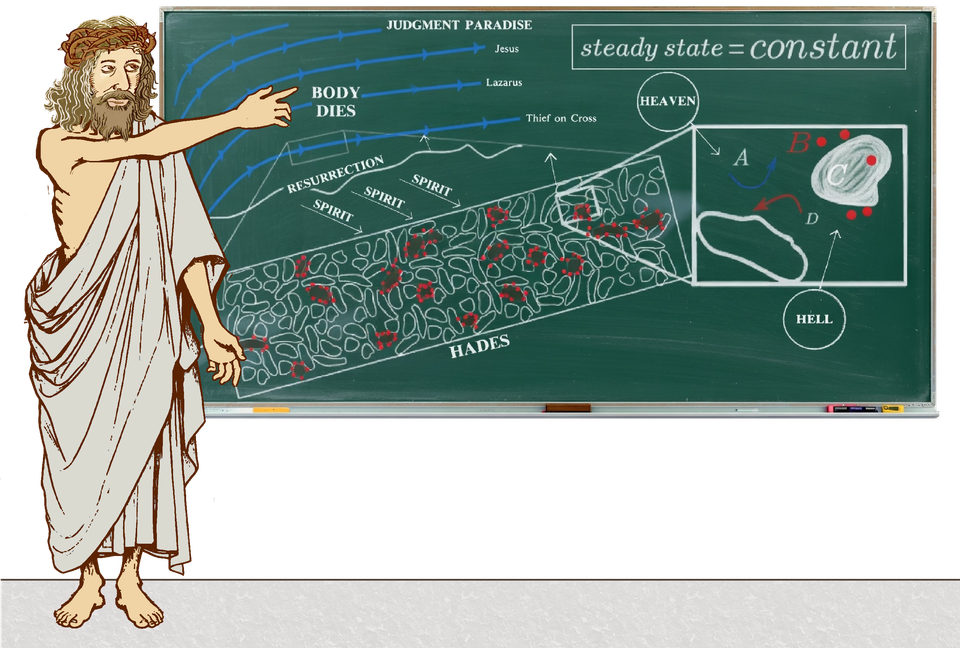
(Author’s art, in Columbia, just before flying to New York and being turned away. Note the date)
19. The Book of Job/Answer to Job (Jung) (age 25)
Since this is when I first read the Bible, presumably the influence of the book of Job began here also. This would be especially the case if it was also the time I first read Jung’s Answer to Job, as it quite likely was. Did I identify with Job right from the get-go? Since my twenties were the years of my most relentless suffering, probably yes. Having read the book countless times since then, I mostly enjoy the first and final few chapters, and feel the book could be quite a bit shorter (poetry has never been my thing). This is perhaps ironic, since the prologue and the epilogue are usually considered to have been tacked on from older sources, and to be the least literary portions of the book. A more accurate summation might be that the poetic sections in the middle acts as a commentary on, and a subversion of, the older legend of Job. The main appeal of the book for me is in its subversive, anti-canonical thrust. Also, the character of Job is an obvious forerunner to Jesus, both in the sense of being a sacrifice of God (and bait to the Satan) and a rebel standing up against (and being scapegoated by) the institutions of faith, and slavish adherence to scripture. Job is a spiritual realist.
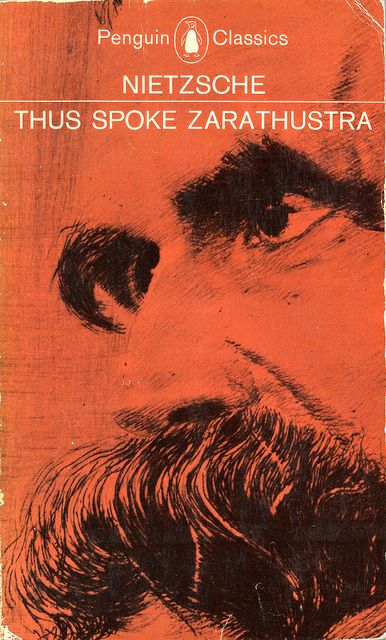
20. Thus Spoke Zarathustra, by Frederic Nietzsche (age 25).
In that same year, 1992 to 1993, I also read Nietzsche for the first time, and was especially impressed, inspired, and imprinted—for better or for worse—by his prophetic novel, the first three parts, at least, before it spirals into incoherence (rather as did its author). What I responded to most in Nietzsche’s writing was the passion, the visionary insight, and the Dionysian energy of the prose. I never really took to heart the idea of the will to power or the death of God, and even the Übermensch concept was one I regarded as questionable (and certainly I had no interest in his “eternal return” concept). At the same time, one can hardly respond to Thus Spoke Zarathustra as I did without taking on some of these ideas, at least provisionally. This is only to say that at no time did I consider myself a Nietzschean, nor did I ever become a dedicated consumer of his writings. But something about him felt like a kindred spirit, not least his apparent affinity for Dostoyevsky (they both had life-defining visions of horses being whipped to death).