33 Books That Changed My Life (for Better or Worse)
Part 1 of 4, from Piglet to Gregor Samsa
(Taking a break from the Ellul series while readers digest)
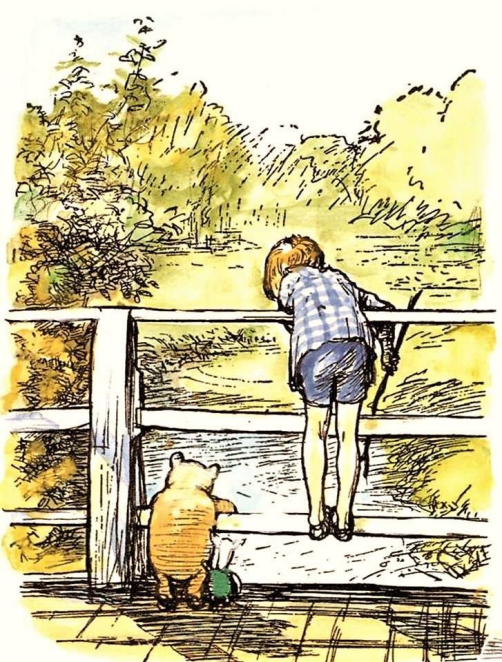
1. Winnie the Pooh, by A.A. Milne (age 4)
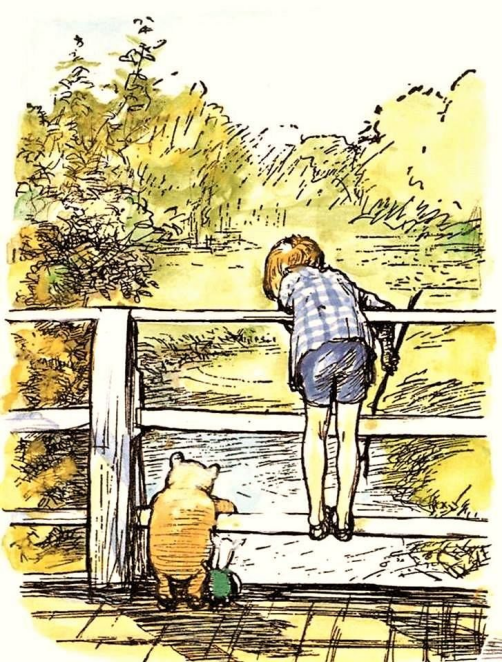
Along with Beatrice Potter, these are the first stories I remember having read to me as a child, by my stepfather (I still have a couple of cassettes of him reading, with occasional commentary from myself, around the age of seven). Piglet is perhaps the earliest fictional identification figure I remember having. The last story of the series is called “The Enchanted Forest,” in which all the characters say goodbye. I found it too painful to hear it, and I would never let my stepfather read it. It had a kind of dark unbearable poignancy. (Despite this I still remember the last words —roughly—“Somewhere still, in that enchanted forest, a little boy and his bear are dancing.”) Decades later, though some (including me) have questioned A.A. Milne’s associations with British intelligence, it’s hard to me to see anything sinister or corrupting in these stories, even seen through the most paranoid lens.
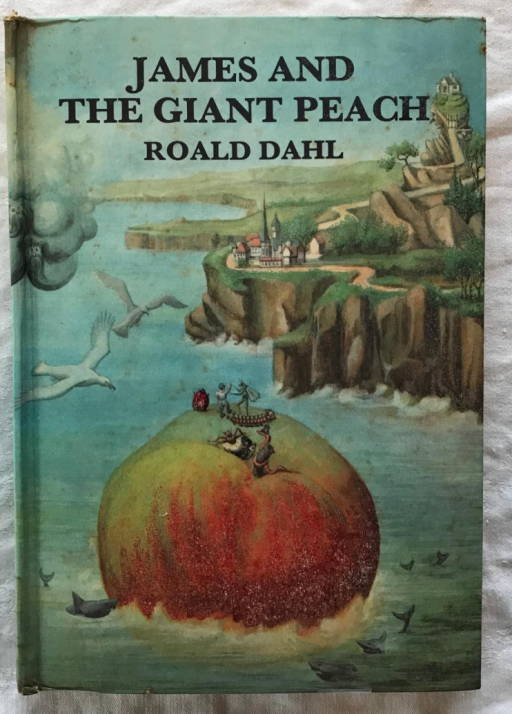
2. James and the Giant Peach, by Roald Dahl (age 6)
Dahl was the next major literary influence in my childhood. I especially loved this book, along with Charlie and the Chocolate Factory and The Fantastic Mr. Fox. His books were a step up from the archetypal animal tales of Potter and Milne, and they drew me into a slightly sinister, wholly surreal fictional landscape. Roald Dahl was also an adult writer, and many of his short stories focused on sex. I corresponded with him briefly, around age 10 or 11, by which time I was already reading his adult stories. I initially wrote to him to point out a clear case of someone plagiarizing one of his stories, in a Pan’s Book of Horror Stories, the series I was also reading during that period of my life. Dahl, as I recall, was only amused by it, and we corresponded for a brief time. I should have kept those letters; or rather my mother should have, since unlike A.A. Milne, Roald Dahl became an industrial franchise. He also had intelligence connections.
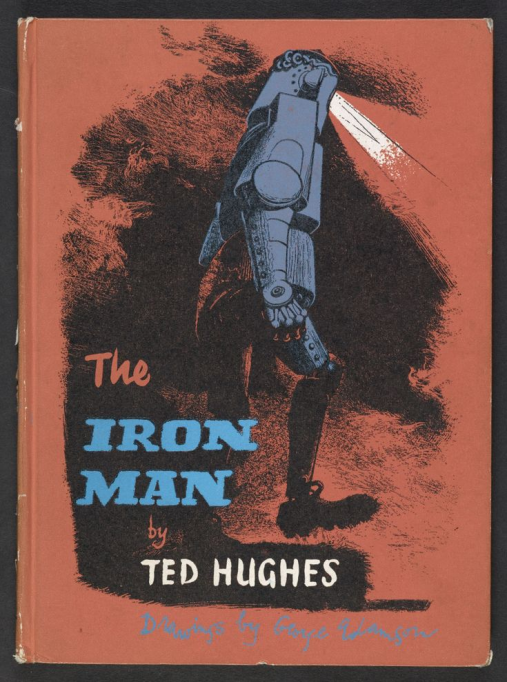
3. The Iron Man, by Ted Hughes (aged 7)
This was my favorite book as a child and I read it countless times. Much later, it was made into a movie called The Iron Giant, which I never saw. The Iron Man is an archetypal story that includes a giant alien Behemoth coming to Earth, blotting out the sun on its way there (quite a Rudolf Steiner type image). In the final stand standoff between the Iron Man and the Behemoth, the Iron Man challenges the Behemoth to a test of mettle—or metal in the case of Iron Man—which entails submitting to ordeal by fire. The Behemoth has to fly to the Sun in order to match the Iron Man’s ordeal, which involves building a pyre on which he repeatedly lies, until he is white hot. The Behemoth eventually gets so burnt out by his trips to the Sun that it surrenders and concedes defeat. The Iron Man is a bit like a cross between the Tin Man and Jesus, a self-sacrificial figure, though he is perhaps a dubious avatar figure, insofar as it is his inorganic, constructed nature that allows him to overcome the (organic) Behemoth. Certainly, a giant robot protagonist has strange implications, in terms of how that affects the child’s psyche. I do remember a fancy dress costume that I went to as a child (around 9 or 10) for which I dressed up as a robot (I might have won second prize). My favorite part of The Iron Man, as I recall, was the first chapter, in which the Iron Man, having fallen from who-knows-where and shattered into many parts, reassembles himself piece by piece. (It starts with a hand that finds an eye, then is able to see its way to an arm, and so on.) This is a kind of mythic narrative unto itself, about fragmentation and return to wholeness.
4. Marianne Dreams, by Catherine Storr (age 8)
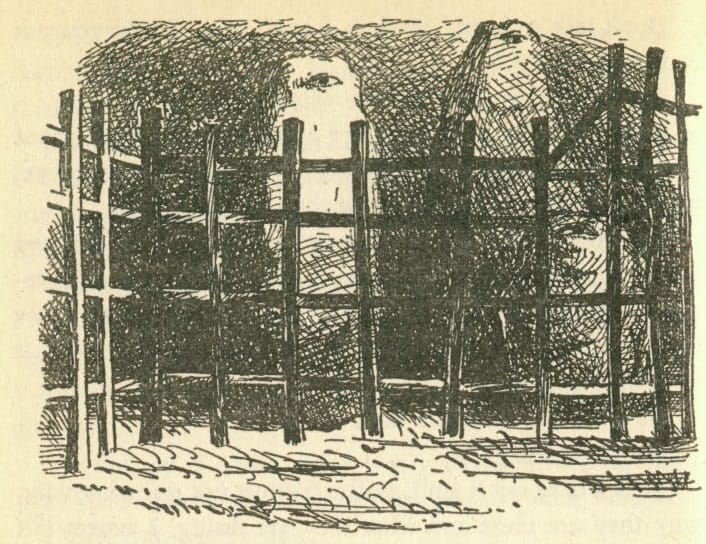
This book was a forerunner for my fascination with Carlos Castaneda and “the art of dreaming.” It’s a teenage novel that became my favorite, after Iron Man, and that definitely anticipated the sorcery aspirations of my twenties. Marianne is confined to bed for weeks with an illness, and finds an old pencil. Whatever she draws with it, she dreams of that same night. It begins with a house, with a boy in the window. Whatever she adds to the drawing is added to the landscape that she enters into at night, and gradually she discovers that the dream reality is as real as the waking world. As she consciously wields this power, she begins to abuse it and the dream turns to nightmare. Particularly memorable for me was the standing stones that Marianne draws outside the house; when she gets angry with Mark she puts eyes on them, in order to keep him a prisoner in the house. But then she also becomes a prisoner of her own imagination. I read this to my niece when she was ten or eleven, and still found it compelling.